Barricade Cover Quantity Planning: Spares, Phases and Reorders
The right number of barricade covers is one for every public-facing barrier, plus a small spare set, with sponsor panels counted separately from evergreen ones. Custom Barricade Covers builds covers for bike-rack, French, water-barrier and A-frame hardware, and this guide shows how to count, phase and reorder for concerts, venues and job sites.
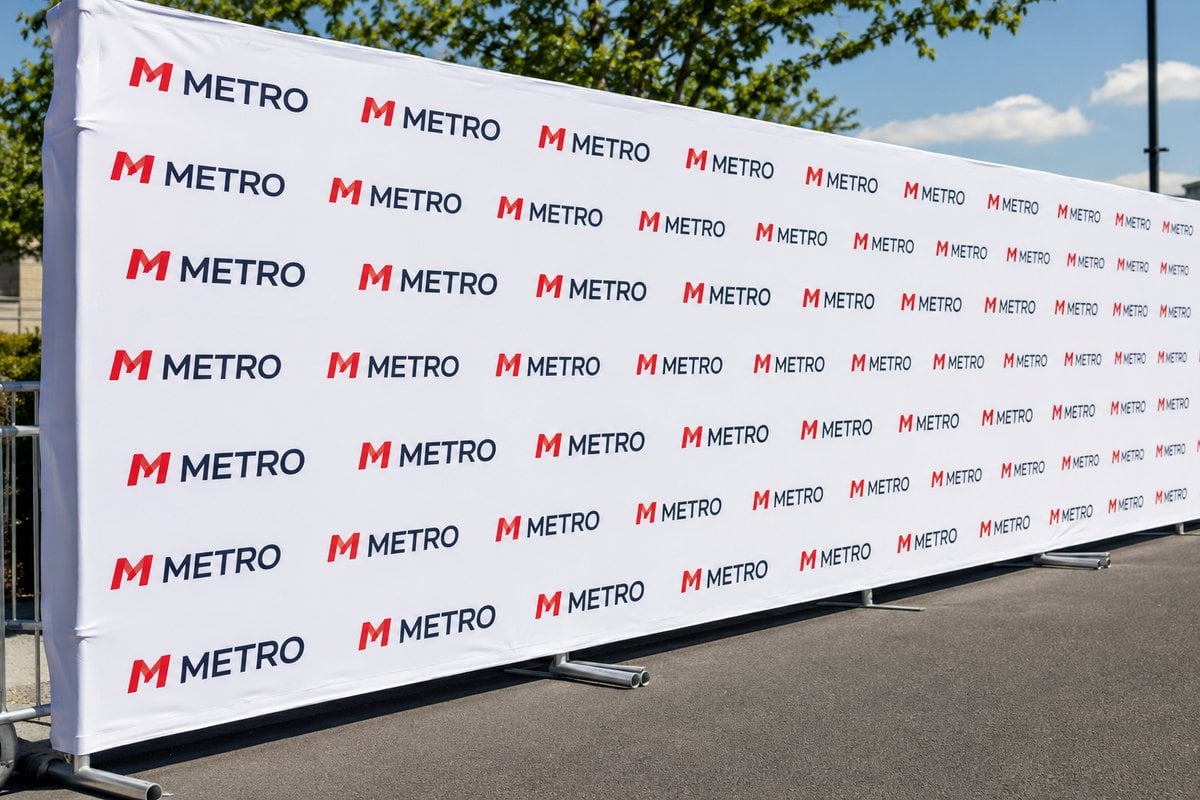
- Count barricade covers by barrier, not by perimeter length
- Bike-rack, French, water-barrier and A-frame covers are counted separately
- Separate evergreen covers from sponsor covers to keep reorders small
- Free mockup within 24 hours; production about 2 weeks after approval
How many barricade covers should you order for a concert, venue or job site?
The right number of barricade covers equals the number of barriers that will be visible to the public, plus a small spare set, minus any barriers that sit behind stages, tents or fencing where nobody will see them. Start from your barrier inventory or rental contract, not from a guess about the length of the perimeter, because every cover is built for one specific frame.
Custom Barricade Covers makes covers for steel bike-rack barricades, French barriers, plastic water barriers and A-frames, and each style is counted separately. A concert that uses bike-rack barriers for the front-of-house pit and water barriers along a vehicle lane has two counts, not one. A contractor fencing a site with water barriers on the street side and A-frames at a sidewalk detour also has two counts.
The simplest planning method is to walk the site plan barrier by barrier and mark each one as one of three things:
- Public-facing: seen by guests, drivers, cameras or neighbors. These get covers.
- Back-of-house: hidden behind production, loading or storage areas. These usually stay bare.
- Moveable: barriers that shift during the day, such as gate lanes or queue switchbacks. These get covers and count toward your spare plan.
Which barriers actually need barricade covers?
Barricade covers earn their place on the barriers people photograph, queue beside or drive past. Entry gates, VIP and media areas, the front of a stage, finish chutes, storefront-facing construction runs and any barrier that shows up in broadcast or social video are the first priority. Interior lanes that only staff see are the last.
Ranking barriers this way lets you match the order to the budget without losing impact. A venue that cannot cover every barrier on day one can cover every gate and the main sightline, then add the rest later from the same approved artwork. Because Custom Barricade Covers keeps your design on file after the mockup is approved, a later batch can follow the same layout.
| Location | Priority | Typical cover style |
|---|---|---|
| Main entry gates and ticket lines | Highest | Blockout or mesh bike-rack covers |
| Media, VIP and sponsor areas | Highest | Step-and-repeat or blockout covers |
| Stage front and pit | High | Mesh covers for airflow and wind |
| Vehicle lanes and street frontage | High | Water-barrier sleeves |
| Sidewalk detours | Medium | Two-sided A-frame covers |
| Back-of-house and loading | Low | Usually left bare |
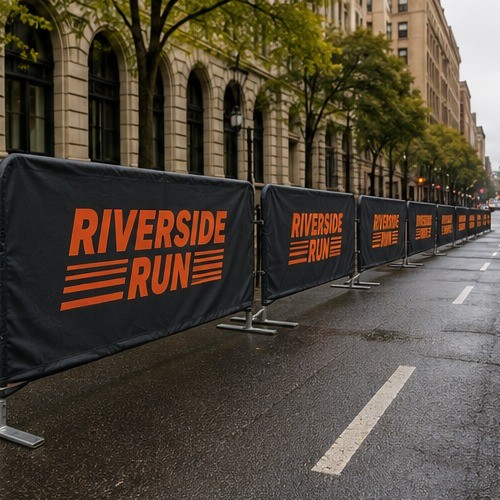
How many spare barricade covers should you keep on hand?
Plan spare barricade covers around the risks your event actually faces rather than a fixed rule. Spares cover three situations: a barrier that gets added on site when the fire marshal or production manager moves a line, a cover that gets torn by a forklift or a crowd surge, and a cover that goes missing after load-out.
Events with lots of moving parts need more spares than static sites. A festival with several gates, changing queue layouts and overnight teardown benefits from a deeper spare set than a construction project where water barriers sit in the same place for months. Long single-design runs are also easier to back up than sponsor rows, because any spare can replace any damaged panel.
- Single repeated design: spares are interchangeable, so a small set protects the whole run.
- Sponsor-by-sponsor panels: each sponsor may need its own spare, or one generic event-branded spare per zone.
- Continuous images across many covers: a missing panel breaks the picture, so plan spares for the panels most likely to be damaged, such as gate ends.
A practical middle path is a generic spare: an event logo cover that can stand in for any panel without looking out of place.
Should you order all your barricade covers at once or in phases?
Order barricade covers in one run when the barrier count is locked and the artwork will not change. Order in phases when the count is still moving, when sponsors are still signing, or when you want to prove the look at one event before branding a whole fleet.
Phasing works well for venues and contractors. A stadium might cover its main gates for opening day and add parking-lot water barriers later. A builder might brand the street frontage of one site and then roll the same artwork out to the next project. Each phase goes through the same process: a free mockup within 24 hours, unlimited free revisions, and production of about 2 weeks once you approve, with faster turnaround available with express shipping.
The trade-off is coordination. Every phase is a separate production run, so keep the approved artwork, the barrier types and the panel order in one shared file. You pay nothing until you approve the design for each phase, which makes a small first phase a low-risk way to check fit, color and readability before committing to the full count.
- Lock the public-facing barriers for the first event.
- Approve the mockup and produce that set.
- Install, photograph and note anything to change.
- Reorder the next phase from the approved file with any updates.
How do sponsor changes affect barricade cover quantities?
Sponsor changes affect barricade cover quantities more than any other factor, because a sponsor cover is only useful while that sponsor is on board. Separate your order into covers that will stay valid for years and covers that are tied to a single season or contract.
Evergreen covers carry the venue, city, team or company name, wayfinding and safety messages. These can be ordered in larger numbers because they will be reused at every event. Sponsor covers carry a logo with a contract end date, so order those to the exact count each sponsor bought and plan to replace them when the deal changes.
Mixing the two on one perimeter keeps the reorder small. When a sponsor leaves, you replace only that sponsor’s panels while the evergreen covers stay up. Custom Barricade Covers can mix cover styles and designs in one order, so evergreen and sponsor panels can be quoted together and tracked by design on the mockup. The finish-line sponsor guide shows how race organizers structure these rows.
What information does a quote need to get the quantity right?
A quote for barricade covers comes back faster and more accurately when it includes a count by barrier type, a count by design, and the date the covers need to be on site. Those three numbers decide the production plan, the spare set and whether express shipping is worth considering.
Send the details on the quote form in this order:
- Barrier types and counts: bike-rack, French, water barrier or A-frame, with a photo if the hardware is rented or unusual.
- Designs and counts: how many covers carry each design, and whether any form a continuous image.
- One-sided or two-sided: especially for A-frames and barriers that face crowds on both sides.
- Material preference: mesh for wind and airflow, blockout for full-color sponsor walls.
- In-hand date and delivery address: the venue, warehouse or job-site trailer.
- Future phases: if you expect to reorder, say so, so the artwork is set up for repeat runs.
If you are unsure of a count, send your best estimate and the site plan. The team will flag gaps when the mockup comes back, and you can adjust quantities before approving. The how it works page walks through each step.
What quantity mistakes waste barricade covers?
The most common quantity mistake is counting perimeter length instead of barriers, which leads to the wrong number of covers for frames that come in different widths. The second is forgetting that one site often uses more than one barrier type, so a single total hides a shortfall in one style.
Other mistakes show up after install day:
- Covering hidden barriers: paying for covers that sit behind a stage wall nobody sees.
- No spares for continuous images: one damaged panel leaves a visible gap in the picture.
- Dating every cover: printing the event year on evergreen panels turns reusable covers into single-use ones.
- Mixing rental hardware: rental barriers from a different supplier may not match the style you counted, so confirm the type before ordering.
- Ordering too close to the date: a late count change leaves no room for a second phase.
Avoiding these keeps every cover working. A careful barrier walk, an honest split between evergreen and sponsor designs, and a modest spare set usually solve all of them before production starts.
How do you plan barricade cover reorders for future events?
Plan barricade cover reorders by keeping a simple inventory after every event: how many covers came back, how many were damaged, which designs are still valid and which barriers were added on site. That list becomes the next quote request.
Store covers by design and barrier type so the count is easy to check, and note where each one was installed. If the same gate always loses a panel to equipment traffic, add a spare for that gate next time. If a zone never used its covers, shrink that count. The multi-season reuse guide covers cleaning and storage in detail.
Reorders are simplest when the original artwork is built for repetition: evergreen branding without a year, sponsor panels separated by design, and wayfinding messages written so they stay true at every event. Covers built this way can be reordered in small batches to replace damage or add barriers, and a large event can grow its covered perimeter season by season instead of buying everything at once. For large first orders, the bulk ordering guide explains how to organize many designs in one run.
Frequently asked questions
Should barricade covers be counted by barrier or by perimeter length?
Barricade covers should always be counted by barrier, because each cover is built to fit one specific frame. Perimeter length hides differences between bike-rack, French, water-barrier and A-frame hardware, which come in different widths. Walk the site plan barrier by barrier, mark which ones the public sees, and send that count by type to Custom Barricade Covers so the quote matches the hardware you will actually install.
Can a venue cover only its gates first and add more barricade covers later?
Barricade covers can be ordered gate first and expanded later, which is a common approach for venues testing the look. The approved artwork stays on file, so a second batch can follow the same layout and colors. Each phase gets its own free mockup within 24 hours and runs about 2 weeks after approval, so plan the later phase with enough lead time before the next event.
What is a generic spare barricade cover?
A generic spare barricade cover carries only the event or venue logo, so it can replace any damaged or missing panel without looking out of place. Generic spares are useful when a perimeter mixes several sponsor designs, because keeping a spare for every sponsor can be wasteful. Custom Barricade Covers can include generic spares in the same order as sponsor panels, each tracked as its own design.
Do back-of-house barriers need barricade covers?
Barricade covers are rarely needed on back-of-house barriers that sit behind stages, loading docks or production tents, because guests and cameras do not see them. Skipping those barriers lets the budget go toward gates, media areas and street frontage instead. The exception is a back-of-house run visible from a neighboring street or a broadcast angle, which should be treated as public-facing in your count.
How should a contractor count barricade covers for a site with several barrier types?
A contractor should count barricade covers separately for each barrier type on the site, such as water barriers along the street and A-frames at a sidewalk detour. Each style is built differently, so one combined total can leave a shortfall. List the types and counts on the quote form, add a photo of any rental hardware, and Custom Barricade Covers will confirm the fit before the mockup.
Should sponsor barricade covers be ordered separately from evergreen covers?
Sponsor barricade covers are best planned as their own group, even when they ship in the same order as evergreen covers. Evergreen panels with venue names, wayfinding or safety messages stay useful for years, while sponsor panels end with each contract. Separating them on the mockup means that when a sponsor changes, only those panels need replacing and the rest of the perimeter stays up.
How do queue switchbacks affect the number of barricade covers to order?
Queue switchbacks add barricade covers to the count because the barriers that form each lane are seen up close by everyone waiting in line. Switchback layouts also change during the day, so some barriers move between lanes and gate ends. Count every barrier that might be used in the queue, then add a few spares, since covers in high-traffic lines take the most wear.
Can damaged barricade covers be replaced without reordering the whole set?
Damaged barricade covers can be replaced individually by reordering just those panels from the approved artwork. Keep a note of which design and barrier type each damaged cover used, and send that list with a quote request. Custom Barricade Covers produces the replacements to the same layout, and you pay nothing until you approve the mockup, so a small replacement batch is simple to arrange.
Is it smarter to overorder barricade covers or order exactly what is needed?
Barricade covers are best ordered to the confirmed public-facing count plus a modest spare set, rather than a large overorder. Extra evergreen covers can be useful if the barrier fleet is likely to grow, but extra sponsor covers lose value when contracts end. If the count is uncertain, phase the order so the second batch reflects what the first event actually needed.
What should an event team record after load-out to plan the next barricade cover order?
An event team should record how many barricade covers came back, which ones were damaged, which designs are still valid and which barriers were added on site. Note the locations that lost panels so those gates get extra spares next time. That inventory turns directly into the next quote request, which makes reorders with Custom Barricade Covers faster and keeps the perimeter consistent.
Do two-sided A-frame barricade covers count as one cover or two?
A two-sided A-frame barricade cover is counted as one cover for each A-frame, with a design for each face. Mention on the quote form that the A-frame faces traffic from both directions, and whether the two sides carry the same or different messages. The free mockup will show both faces so the team can check wording and arrows before approving production.
Get a free mockup for your barricade covers
Send your logo or idea and the quantity you have in mind. Custom Barricade Covers returns a free mockup within 24 hours, you approve the design before anything is produced, and standard turnaround is about two weeks with faster options available. Get a custom quote.